From an in-house CRM team to a large consulting firm, and then to Enehano. In this interview, Adriana talks about why she enjoys working with the manufacturing sector, how clients approach AI, and why data is more valuable today than ever before.
In this article, you will learn:
- why knowing the technology alone is not enough, and why experience on the business side ultimately makes a better consultant
- what sets manufacturing projects apart from other industries, and what manufacturing companies need from a CRM system
- how manufacturing companies approach AI in practice and what specific results implementation brings them
Salesforce as a Natural Direction
Adriána, you’ve been at Enehano for over a year now. What brought you here?
Salesforce, a concentration of specialists in one place, and the company’s reputation. In my previous job, working in an in-house CRM team, I eventually felt I had nowhere left to grow. At a large consulting firm, what I missed was a focus on Salesforce.
I knew about Enehano from the Salesforce community, and over time we naturally found our way to each other. We share the same mindset and values.
Data is today's most valuable asset, it's what allows us to plan efficiently, optimise, and most importantly, know where to direct our attention.
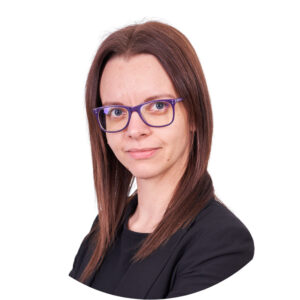
Senior Busines Consultant
How did you get into Salesforce and the role of Senior Business Consultant?
My introduction to Salesforce didn’t start in IT at all, it started on the other side. On the business side. Fortunately, I got the opportunity to look behind the curtain and cross over to the right side.
My career progression was entirely natural. I started as an administrator and tester of various systems, not only CRM. But Salesforce was, of course, the one that interested me most.
Over time, I moved into business analysis and more challenging tasks. Through experience and a combination of technical and business knowledge, I eventually found my place as a consultant.
The Customer Has to See the Value
You work mainly with clients from manufacturing companies. What makes their projects different?
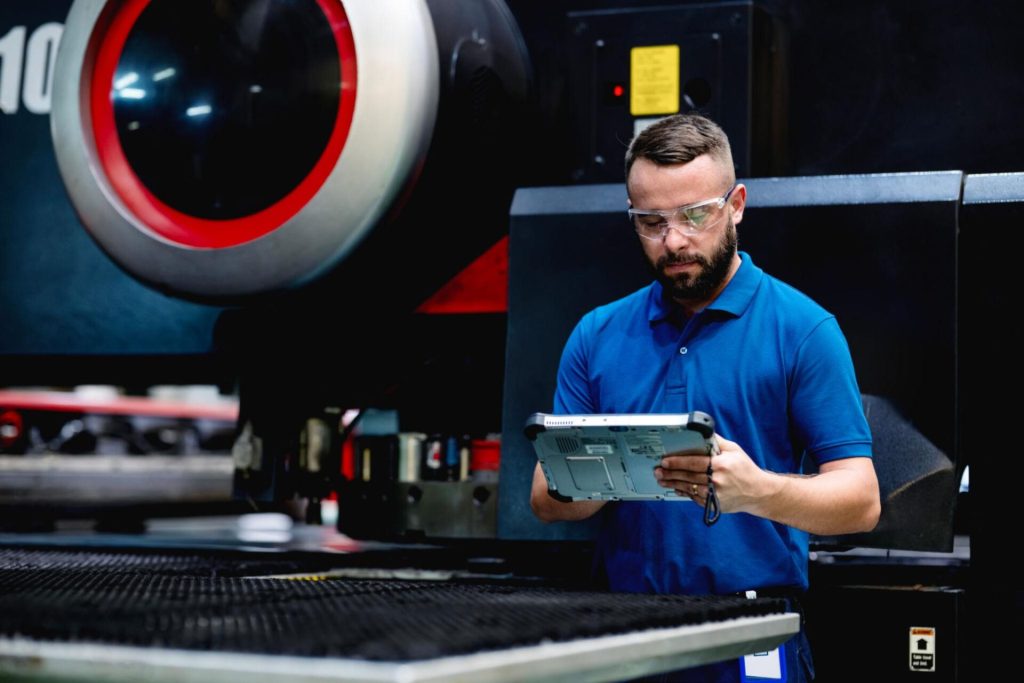
Manufacturing is a completely different discipline from the financial or telecoms sector. It’s a tangible world. Products aren’t just abstract lines in a system that you simply write, delete, or correct.
It involves materials that physically move through a production process and sit somewhere in a warehouse, waiting to be delivered to their destination. Clients in manufacturing are demanding. They want to digitalise and they need a system that will be a support, not a bureaucratic obstacle. A CRM therefore has to be built so that working with it is as intuitive as possible.
A field technician needs to find the right information immediately. The same goes for a manager who needs to see the sales results of their team.
And what about AI and manufacturing? What challenges does AI bring?
AI is of course a buzzword, and manufacturing hasn’t escaped it either. But clients tend to be realists. They certainly don’t expect artificial intelligence to fully replace them overnight, or that they’ll be sitting back watching it do all the work for them.
Together, we therefore look for solutions that gradually make their work easier, whether that means helping generate emails for sales teams or service agents answering queries on customer portals.
Artificial intelligence in manufacturing is gradually becoming a powerful tool and a significant competitive advantage.
Can you recall a project or a moment when you saw that a solution was genuinely helping a client?
Every solution we deliver helps in some way, and it’s hard to pick just one example. The greatest impact I see is the moment when Salesforce turns a confusing situation into a clear system, and the client realises for themselves that moving from a notebook to a CRM doesn’t have to be painful.
We often see that within a single sales department, everyone can operate differently and when the manager wants to look at the end of the day at how the team is doing, they don’t know where to start.
Data is today’s most valuable asset, because it’s what allows us to plan efficiently, optimise, and most importantly, know where to direct our attention.
Community as a Way to Recharge
What does your life outside work look like? What gives you energy?
Paradoxically, even outside work it’s Salesforce. Together with colleagues, we founded a community in Bratislava and we regularly meet with enthusiasts who share the same passion. But when my batteries are truly flat and even Salesforce feels like too much, it’s like any true millennial, cycling.
Also read the interview with Adam Böhm, who works at Enehano as a Senior Business Consultant and was drawn back to technology by AI.
Want to know who currently makes up the AI team at Enehano and what projects they’re working on? Read the article: How Enehano’s AI team helps companies integrate agentic technologies into their day-to-day operations.